All Categories
Featured
Table of Contents
- – Operational Systems as the Foundation for Clie...
- – Data Transparency and the Rise of Real-Time ROI
- – Predictive Churn Modeling in 2026
- – The Human Element: Account Management without ...
- – Aligning Incentives with Client Goals
- – Scalability vs. Personalization
- – Regional Economic Factors and Retention
- – Financial Health and Contract Structures
- – Summary of Retention in the Scaling Phase
Operational Systems as the Foundation for Client Longevity in 2026
High-growth marketing firms in 2026 face a specific set of hurdles. The era of rapid client acquisition without a focus on infrastructure has passed. Today, firms operating in the local market prioritize operational excellence to prevent the "leaky bucket" syndrome that plagued agencies earlier in the decade. By 2026, the average cost to acquire a new client in the United States has climbed to over $4,500 for mid-market accounts, making the retention of existing contracts a financial necessity rather than a secondary goal.
Success for many firms hinges on Online Website Marketing Answers. When an agency scales, communication often breaks down. A firm that managed five clients with a handful of spreadsheets cannot manage fifty clients with the same tools. The transition to centralized project management systems that integrate with financial reporting is no longer optional. These systems allow account managers to see, in real-time, whether a project is staying within the 40-hour weekly cap or if it is drifting toward unprofitability.
Firms in areas like the surrounding region are moving toward "Productized Service Delivery." This involves breaking down complex marketing tasks into repeatable, documented steps. When every employee follows the same process for a campaign launch or a monthly report, the quality remains consistent. Clients do not stay because of one talented individual; they stay because the agency as a whole provides a reliable result every month. This reliability is the bedrock of trust in 2026.
Data Transparency and the Rise of Real-Time ROI
In 2026, clients demand more than a monthly PDF summary of their performance. The standard has shifted toward live dashboards that show exactly where every dollar of their budget is going. For a business in the local area, seeing a direct correlation between marketing spend and revenue is the only way to justify a $10,000 monthly retainer. Agencies that provide this level of transparency see a 30% higher retention rate compared to those that keep their data behind a curtain.
Online Website Marketing Business Marketing Analysis offers a path toward sustainable revenue. By integrating client CRM data with agency performance metrics, firms can show the true lifetime value of the leads they generate. This deep integration makes the agency an essential part of the client's internal operations. It is much harder for a company to fire an agency that has built their entire data reporting infrastructure than it is to fire one that just manages a few social media accounts.
These data-driven relationships also allow for more honest conversations about budget. If a campaign in Fontana or Rialto is underperforming due to market shifts, the data shows it immediately. Instead of waiting for a quarterly review to fix a problem, the agency can pivot mid-month. This proactive approach proves to the client that the firm is looking out for their bottom line, not just collecting a fee.
Predictive Churn Modeling in 2026

Modern firms are using predictive analytics to identify clients who are at risk of leaving before they even know it themselves. By monitoring signals such as a decrease in email open rates, fewer logins to the client portal, or a delay in invoice payments, agencies can flag an account for "rescue" protocols. In 2026, the goal is to resolve a grievance before the client has a chance to voice it.
Businesses are looking for Online Website Marketing for Businesses. When the data flags a potential issue, a senior strategist can step in to offer a "Value Reset." This is not a sales pitch, but a deep review of the client's original goals versus their current reality. Often, a client is unhappy because their business goals changed, but the agency is still executing the old plan.
The Human Element: Account Management without the Fluff
While data and systems are essential, the human connection remains the final check against churn. In 2026, the role of the account manager has changed. They are no longer "order takers" or "middlemen." Instead, they function as fractional Chief Marketing Officers for their clients. A firm scaling in the region might employ account managers who specialize in specific industries, allowing them to provide insights that go beyond simple digital tasks.
Communication in 2026 is concise. The trend of long, rambling weekly calls has been replaced by five-minute video updates and asynchronous messaging. This respects the client's time while keeping them informed. For a business owner in Chino Hills or Montclair, a clear, three-point update sent on a Tuesday morning is far more valuable than an hour-long meeting on a Friday afternoon.
Agencies are also moving away from generic client gifts and toward "Utility-Based Appreciation." Instead of a basket of snacks, a high-growth firm might provide a client with a ticket to an industry-specific conference or a subscription to a high-level research database. This shows that the agency understands the client's industry and is invested in their professional growth.
Aligning Incentives with Client Goals
One of the most effective retention strategies in 2026 is the implementation of "Success Fees" or "Performance-Based Tiers." In this model, a portion of the agency's compensation is tied directly to the client's growth. If the client hits a certain revenue milestone in USD, the agency receives a bonus. This alignment ensures that the agency is never "coasting" on a retainer.
For firms in the local market, this model builds a sense of partnership. When the agency has "skin in the game," the client views them as a teammate rather than a vendor. This shift in perception is critical for scaling. A vendor is an expense to be cut during a recession; a partner is a resource to be protected.
Scalability vs. Personalization
The greatest challenge for a high-growth firm is maintaining a personal touch while adding dozens of new accounts. In 2026, firms solve this by using "Service Layering." The core of the marketing work is handled by standardized internal teams, while the "Strategic Layer" is handled by high-level consultants who only manage a small number of accounts.
This structure allows the agency to scale its production without diluting the quality of its advice. A client in Brea or Ontario might have their ads managed by a team that handles 500 accounts, but their strategy is set by a person who only handles ten. This ensures that the big-picture thinking remains sharp and tailored to the local market.
Internal documentation also plays a role here. Every client has a "Living Playbook" that records everything from their preferred communication style to the specific nuances of their industry competitors. If an account manager leaves the firm, the new person can step in and understand the client's history within an hour. There is no "knowledge gap" that could lead to client frustration.
Regional Economic Factors and Retention
Firms operating in the United States must account for regional economic shifts when planning retention strategies. In 2026, localized inflation and labor costs can impact a client's ability to maintain high marketing spends. Agencies that stay informed about the business climate in their specific area can adjust their services before the client asks for a discount.
If a particular sector in the Inland Empire is experiencing a downturn, a proactive agency might suggest a "Pivot Strategy" rather than waiting for the client to cancel. This could involve shifting budget from long-term brand building to immediate lead generation. By being the first to suggest a budget reallocation, the agency proves it is aware of the client's external pressures.
Retention is not about one big gesture. It is the result of hundreds of small, intentional actions. From the way an invoice is formatted to the speed of a technical support response, every interaction either builds or erodes trust. High-growth firms that master these details in 2026 find that they no longer need to spend as much on sales, as their reputation for excellence does the work for them.
Financial Health and Contract Structures
The way contracts are written in 2026 has also evolved. The industry is moving away from rigid, 12-month lock-in agreements toward more flexible, goal-oriented arrangements. While this might seem counterintuitive for retention, it actually builds longer relationships. When a client feels they have the freedom to leave, they are often more likely to stay because the pressure of the "contractual trap" is removed.
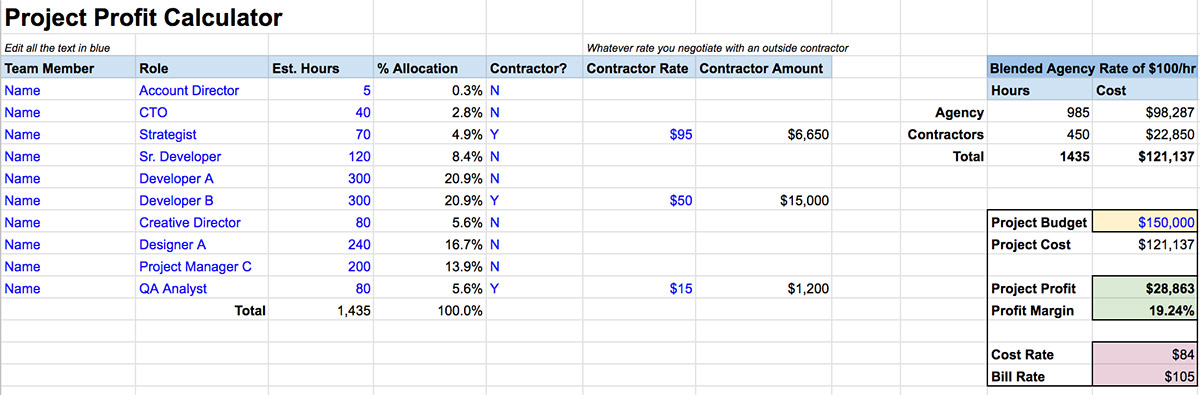
Agencies are now using "Master Service Agreements" (MSAs) that define the relationship, combined with "Statements of Work" (SOWs) that can be changed every 90 days. This allows the firm to stay agile. If a client wants to shift from one specific tactic to another, they can do so without rewriting the entire contract.
This flexibility is particularly useful for firms in the local area that work with mid-sized businesses. These businesses often experience rapid shifts in their own markets and need an agency that can move at their speed. By 2026, agility has become a key metric for client satisfaction, ranking just behind ROI and communication.
Summary of Retention in the Scaling Phase
Retention in a high-growth environment requires a blend of cold logic and warm empathy. The logic comes from the systems, the data dashboards, and the standardized processes that ensure nothing falls through the cracks. The empathy comes from the strategic advice, the personal check-ins, and the alignment of financial incentives.
Firms that ignore the operational side of the business will find that their growth is unsustainable. They may sign ten new clients a month, but if they lose eight, they are spinning their wheels. The leaders in the marketing sector in 2026 are those who have mastered the art of the "Quiet Account" — the client who is so satisfied with the consistent, data-backed results they receive that they never feel the need to look elsewhere. In any US market, this level of excellence is the ultimate competitive advantage.

Table of Contents
- – Operational Systems as the Foundation for Clie...
- – Data Transparency and the Rise of Real-Time ROI
- – Predictive Churn Modeling in 2026
- – The Human Element: Account Management without ...
- – Aligning Incentives with Client Goals
- – Scalability vs. Personalization
- – Regional Economic Factors and Retention
- – Financial Health and Contract Structures
- – Summary of Retention in the Scaling Phase
Latest Posts
Optimizing Your Search Profile for 2026
Top Tips to Optimize Your Local Map Pack
Why Local SEO Matters for the US Market
Latest Posts
Optimizing Your Search Profile for 2026
Top Tips to Optimize Your Local Map Pack
Why Local SEO Matters for the US Market